Normal People & Love
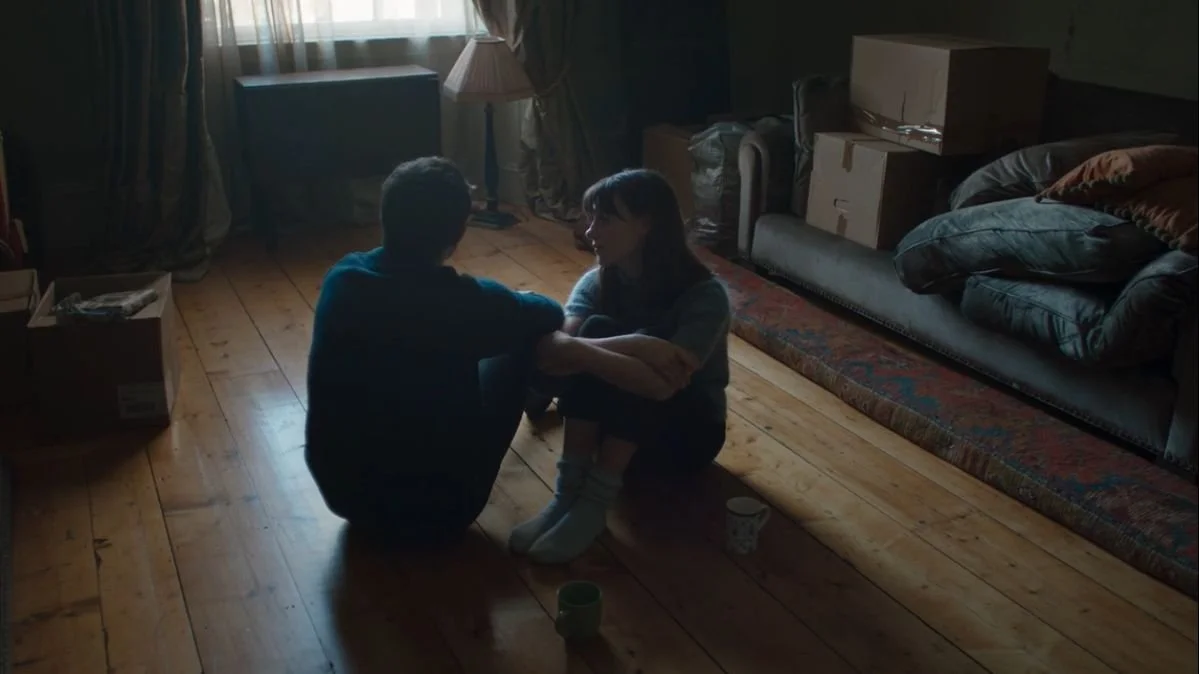
I just finished rewatching Normal People for the first time in five years, and I wrote a lengthy Letterboxd review afterward, so I thought it would be nice to put it here and expand on it a little. It’s strange returning to something you loved years ago and realizing that, while the story itself hasn’t changed, your understanding of it has. I first watched Normal People when I was younger, and although I understood the frustration of watching two people continuously fail to communicate what they felt for one another, I think I understand now why this story has stayed with me for so long. Beyond its portrayal of imperfect love, what has always resonated with me most is the way it captures the distance that can exist between two people who know each other so intimately, and how sometimes, even when you love someone, you can still fail to understand them.
Based on Sally Rooney’s novel of the same name, Normal People follows Marianne Sheridan and Connell Waldron, two students at the same school whose lives intertwine through a chance encounter and continue to intersect over the following years. Their relationship grows, weakens, changes, and repeatedly falls into the deeply frustrating cycle of a will-they-won’t-they romance. From the beginning, Rooney establishes these characters as fundamentally different. They have different personalities, priorities, dreams, and insecurities, all of which influence their inability to communicate with one another. But what makes their relationship so compelling is that these differences never necessarily mean they are incompatible. If anything, they understand parts of each other that nobody else seems to. Their conflict comes from the fact that understanding someone and knowing how to love them are two entirely different things.
Connell is popular, sociable, and the star of his school’s sports team. He has friends, a relatively stable home life, and a place in the social hierarchy that he is reluctant to jeopardize. Marianne, on the other hand, is unpopular, frequently bullied, and isolated by both her peers and her family. When their lives intersect, the conflict between them does not arrive as some dramatic collision of two opposing worlds. Instead, it develops gradually, through small decisions, unspoken feelings, and moments that seem insignificant until their consequences become impossible to ignore. They begin a relationship that is intimate but secretive, one in which their mutual affection is obvious to the audience but rarely acknowledged by either of them. Connell is ashamed of being associated with Marianne publicly, prioritizing his social standing over the person he cares about, while Marianne struggles to believe that his feelings for her could ever extend beyond their private moments together. Neither knows how to communicate what they want without risking the possibility of rejection, and so they repeatedly hurt each other in ways that could have been avoided if they had simply been honest.
Watching their relationship unfold, I find myself increasingly frustrated by how often they seem to misunderstand one another. But that frustration is also what makes their relationship feel so painfully real. There is something particularly devastating about watching two people who care so deeply for each other become their own obstacles. They are not strangers trying to understand one another. They know each other’s habits, insecurities, and vulnerabilities, and yet they still manage to make assumptions that drive them apart. I think this is what Normal People understands so well about relationships: intimacy does not automatically translate into understanding. You can know someone better than almost anyone else and still have no idea what they need from you. Sometimes, the people who matter most to us are the people we find it hardest to be honest with, because the possibility of losing them makes honesty feel like a risk in itself.
As the series progresses, Marianne and Connell continue to enter and exit each other’s lives, growing into different versions of themselves along the way. Connell gradually becomes less concerned with the social expectations that once dictated his decisions and begins to consider the life he actually wants for himself. Marianne, meanwhile, finds a degree of independence at university, developing friendships, gaining confidence, and exploring her identity outside the environment that had previously defined her. Their growth is not linear, and neither character suddenly becomes capable of communicating perfectly simply because they have matured. Instead, they continue to carry their insecurities into new relationships and experiences, sometimes repeating the same mistakes in different circumstances. Their relationship evolves alongside them, becoming less about the circumstances that initially kept them apart and more about the people they are becoming.
By the end, when they finally seem capable of acknowledging their feelings without the same reservations that once defined their relationship, a new conflict emerges. Connell is accepted into a writing program in New York, an opportunity that would allow him to pursue the future he has been imagining for himself, while Marianne has finally found a life in Dublin that she genuinely wants to remain a part of. After years of being separated by miscommunication, insecurity, and circumstances beyond their control, they arrive at a point where loving each other does not necessarily mean making the same choices. Their ending is not a conventional resolution in which every obstacle disappears and the characters receive the relationship they have spent the entire story pursuing. Instead, it leaves them at the beginning of two different futures, with the possibility that they may continue to be a part of each other’s lives even if they cannot be together in the way they once wanted.
I think this is where Normal People becomes something much more meaningful to me than a story about two people who cannot seem to get their timing right. It recognizes that some relationships are not defined by whether they last forever, but by the ways in which they change us. Marianne and Connell spend years influencing each other’s understanding of themselves, often without realizing it. They give each other the space to become people they might not have otherwise become, even when they are not capable of giving each other everything they need. Their relationship is imperfect, sometimes painful, and frequently frustrating, but it is never meaningless. And perhaps that is what makes their eventual separation so difficult to accept. There is no singular villain, no definitive moment that explains everything, and no guarantee that loving someone enough will be enough to keep them in your life.
Rewatching the series five years later, I find myself thinking less about whether Marianne and Connell were supposed to end up together and more about the people I have known who have occupied similar places in my own life. Not necessarily romantic relationships, but friendships and connections that have changed me in ways I only recognized after they had already begun to fade. There is a particular kind of grief in realizing that you can care about someone deeply and still grow apart from them, or that a relationship can be important without being permanent. It is difficult to reconcile the idea that someone can have meant so much to you and still become someone you no longer know how to reach. I think we are often inclined to measure the significance of our relationships by their longevity, as though the amount of time someone stays in our lives determines how much they mattered. Normal People challenges that idea without necessarily offering any comforting alternative. Sometimes, people leave. Sometimes, they stay but become different people. And sometimes, the relationship you remember so fondly is one that could never have existed in quite the same way outside the time and circumstances that created it.
I don't think I would have understood this show in quite the same way five years ago. I was more interested in the frustration of watching Marianne and Connell repeatedly make the wrong decisions, in the desire for them to finally figure things out and give each other the relationship they so obviously wanted. Now, I am more interested in everything that exists between those decisions: the silences, the assumptions, the fleeting moments of understanding, and the ways in which two people can love each other while still struggling to understand what that love requires of them. There is something almost unbearable about how ordinary these moments are. Nothing particularly extraordinary needs to happen for a relationship to change forever. Sometimes, all it takes is a conversation that never happens, a feeling that goes unexpressed, or the assumption that someone already knows what you are too afraid to say.
Perhaps that is why Normal People has stayed with me. It is a story about love, but also about growing up, learning to communicate, and accepting that other people cannot always understand us in the ways we hope they will. It is about the distance between what we feel and what we manage to express, and the sometimes irreversible consequences of that distance. More than anything, it reminds me that the people who shape our lives do not always stay in them, and that this does not make what we shared any less real. Some relationships endure, others change beyond recognition, and some exist only for a particular period of our lives. I don't know if Marianne and Connell were ultimately meant to end up together, and I don't think the answer matters as much to me anymore. What matters is that, for a time, they knew each other in a way that changed them both. And maybe there is something beautiful in that, even if it isn't the ending we wanted.