About Manic Pixie Dream Girls
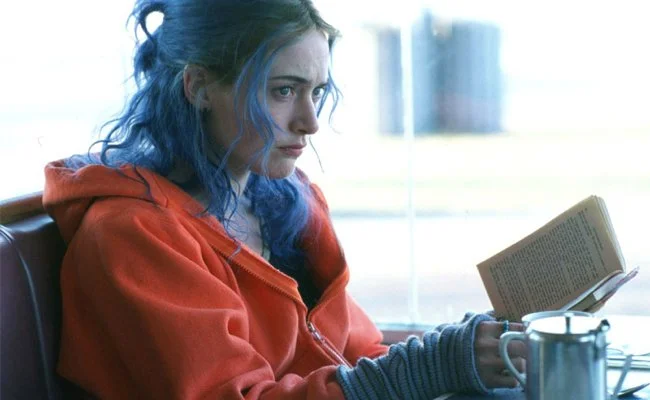
Have you ever imagined your life as a movie? Or had one of those days where you suddenly feel like you’re the main character? Around a year ago, there was a trend on TikTok that played with this exact idea. I never actually had TikTok, so I mostly saw it through other places on the internet, but the videos usually started with something like “I’m not the main character, I’m the…” followed by a character type. “Emo older sibling.” “Best friend who randomly shows up.” “Girl who is somehow always in the background.” The videos would then show movie or TV characters who fit the description. I actually liked this version of the “main character” trend more than the usual romanticizing-your-life version. Not because there’s anything wrong with romanticizing your life, but because I think there’s something more interesting about the characters who aren’t technically at the center of the story. and what side character doesn’t have a more interesting life than the infamous manic pixie dream girls?
Where do i begin on manic pixie dream girls? If you’ve somehow avoided this phrase, a manic pixie dream girl, or MPDG, is basically a female character who enters the story of a usually male protagonist and changes his life through her personality, spontaneity, or general quirkiness. She might take him on an adventure, help him see the world differently, or become his love interest. Sometimes all three.
There are a lot of different conversations surrounding this trope, but the part that interests me most is how often the girl herself feels like she exists mainly to affect someone else’s story. Take Stargirl. I read Jerry Spinelli’s book and later watched the movie, and I really liked Stargirl as a character. She’s charismatic, unusual, outspoken, and basically everything the other students aren’t. But that’s also the problem. So much of what makes Stargirl interesting is how “different” she is. And although the book is called Stargirl, the story is largely told through Leo’s perspective. We experience her through him. It’s almost like she is fascinating because she makes his life more interesting.
They basically fit into this one trope of female archetypes in film that are lively and bring some sort of meaning into the protagonist’s life. Another good example of this would be Ellie from Up. the story was set into motion once we were introduced to her and of course, she is the main factor that causes the adventure in the movie. But the manic pixie dream girl archetype dates further than just the 2000s and early 2010s. One of the first cases in film of an mpdg would be Audrey Hepburn’s character in Roman Holiday. Her character, Anne is introduced to the male character, Gregory Peck. She does help him embark on some sort of journey while they enjoy their time together. Her character in theory does not perfectly align with the mpdg archetype but it does fulfill the main purpose, helping the male character’s story.
Besides that, a manic pixie dream girl’s only substance is their ‘quirkiness’ and how they’re ‘different’- that comment will lead be onto the ‘INLOG’ conversation. In short, INLOG (i’m not like other girls) is a trend where people claim to be different than other girls, in a sense that them being ‘different’ equates to self worth and can be insufferable. She probably wears something slightly strange and listens to music nobody has heard of. And somehow, being different becomes her entire personality. Kat Stratford from 10 Things I Hate About You is a good example to think about here. She’s sarcastic, independent, angry, smart, and very obviously not interested in being liked by everyone. But what makes Kat more interesting to me is that she isn’t just those things. She has reasons for being the way she is. She can be difficult. She can be hypocritical. She can be vulnerable. She feels like a person instead of a collection of character traits that seem more focused on making her different for the sake of being different
***
Last September, I watched Twilight for the first time. I watched it with two of my close friends, and yes, we spent a lot of the movie laughing. “Hold on tight, spider monkey.” The baseball scene. The hair. The staring. All of it. But I will still defend Bella Swan.
Bella is a difficult character to call your favorite because she’s not particularly expressive or exciting. But honestly, that’s part of why I like her, especially in the first Twilight. Catherine Hardwicke’s Twilight has this really specific visual style. The colors are muted, with a lot of gray, green, and blue. Everything feels slightly cold and washed out, which makes Forks feel like its own little world. And Bella fits into that. She’s quiet. She’s awkward. She’s moody. She doesn’t constantly have something clever to say. But she’s also a teenager.
Sometimes I think we expect teenage characters to be much more interesting than actual teenagers. Bella doesn’t feel like a character who is trying to be quirky. She’s just there, watching everything happen around her. I think that’s why I prefer the first Twilight to the later movies. Something about the weird, low-budget, kind of indie feeling of the first movie makes it more memorable to me. Maybe that’s an unpopular opinion. But Twilight is a masterpiece. Yes, I said it.
While going down this entire rabbit hole, I also came across the idea of feminine archetypes. Basically, archetypes are recurring character patterns. There are different systems for categorizing them, but some common examples include the mother, maiden, queen, huntress, sage, healer, and lover. Obviously, this doesn’t mean every female character has to fit neatly into one of these categories. That’s actually what makes character writing interesting. Because when a character becomes only one archetype, you can usually see the writing underneath them.
The girl who is always mysterious. The girl who is always nurturing. The girl who is always independent. The girl who exists to teach the male protagonist how to live. The girl who is “different from other girls.” We see these characters everywhere. And I think the reason they’re so common is because they’re easy to recognize. You can understand who a character is within a few seconds. But a person isn’t that easy.